Why Do We Spend Money on Things We Don’t Need? The Hidden Forces Behind Unnecessary Spending
Have you ever looked at your bank statement and wondered:
“Why did I buy all of this?”
It happens to almost everyone.
Most unnecessary purchases aren’t caused by a lack of financial knowledge. They’re driven by psychology, emotion, and carefully designed marketing strategies.
The surprising truth is that our wallets are often controlled by invisible forces we barely notice.
Understanding those forces is the first step toward taking back control of your money.
In this guide, we’ll explore why people overspend, the psychological triggers behind unnecessary purchases, and practical ways to make more intentional financial decisions.
Every smart spending habit starts with a solid financial foundation. If you haven’t already, read our guide to Money Management and Budgeting. You’ll also benefit from learning about Spending Habits, since long-term financial success depends more on behavior than income.
Your Brain Wasn’t Designed to Save Money
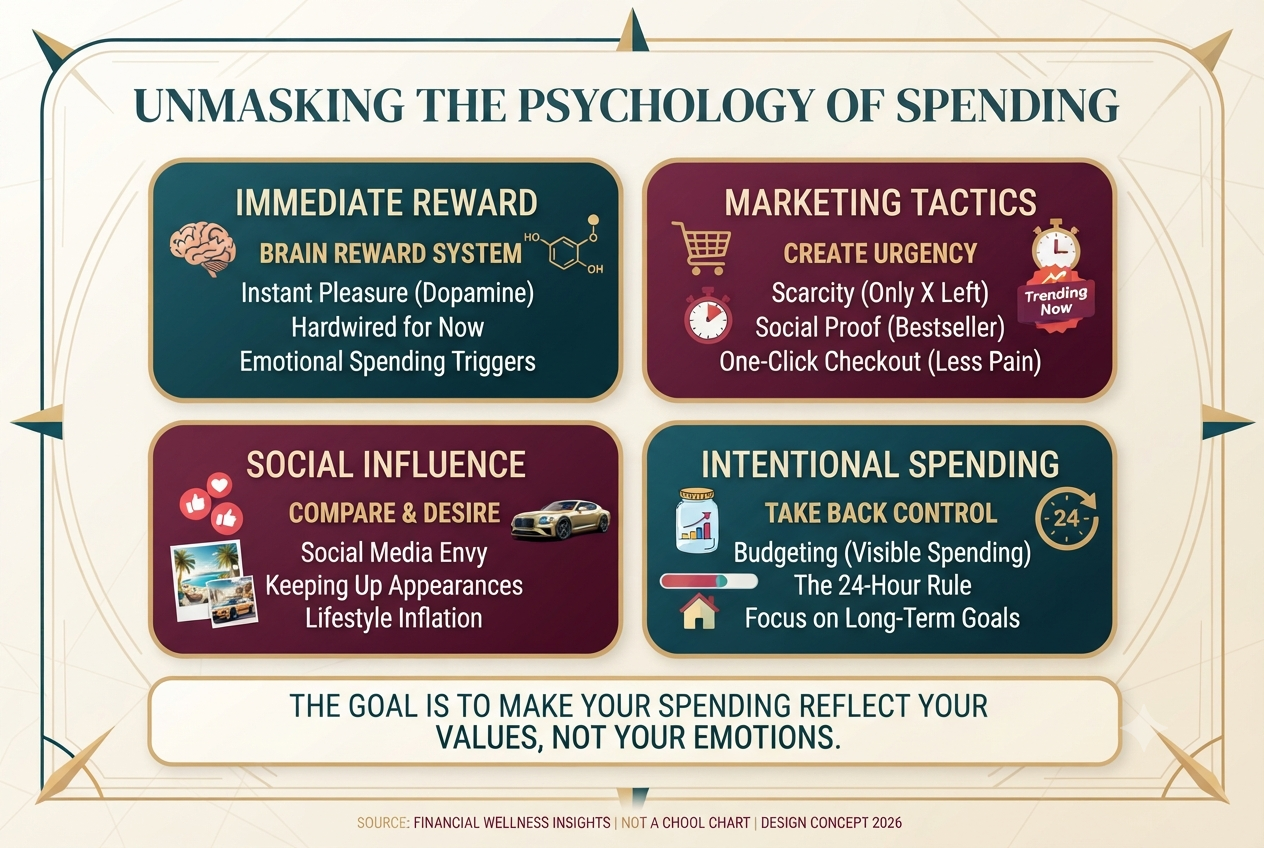
Human beings evolved to seek immediate rewards.
Thousands of years ago, taking advantage of immediate opportunities increased our chances of survival.
Today, that same instinct encourages us to buy something that promises instant satisfaction—even when it doesn’t improve our lives.
Modern shopping taps directly into our brain’s reward system.
Every purchase delivers a short burst of pleasure through dopamine, making buying feel rewarding even when the purchase isn’t necessary.
Emotion Often Wins Over Logic
Many purchases have very little to do with actual need.
Instead, they’re responses to emotions such as:
- Stress
- Boredom
- Loneliness
- Anxiety
- Excitement
- Fear of Missing Out (FOMO)
Shopping can temporarily improve our mood, but the emotional relief usually fades long before the credit card bill arrives.
Researchers describe this pattern as “compensatory buying,” where purchasing briefly relieves negative emotions without solving the underlying problem.
If emotional decision-making affects your investing as well as your spending, our guide on Investment Psychology explains why controlling emotions is one of the most valuable financial skills you can develop.
Marketing Is Designed to Trigger Quick Decisions
Businesses spend billions of dollars understanding consumer behavior.
That’s why you’ll often see messages like:
- “Limited-Time Offer”
- “Only 3 Left in Stock”
- “Flash Sale Ends Tonight”
- “Best Seller”
- “Trending Now”
These techniques create urgency and reduce the amount of time available for rational decision-making.
The less time you spend thinking, the more likely you are to buy impulsively.
Marketing research consistently shows that scarcity, urgency, and social proof significantly increase impulse purchases.
Credit Cards Make Spending Feel Easier
Handing over cash creates an immediate sense of loss.
Digital payments don’t.
Credit cards, mobile wallets, one-click checkout, and stored payment information reduce what behavioral economists call the “pain of paying.”
Because spending feels less tangible, people often spend more than they would with cash.
Our guide on Using Credit Cards Wisely explains how to avoid this common trap while still benefiting from responsible credit card use.
Social Comparison Drives Spending
Social media has transformed how we think about money.
Every day we’re exposed to:
- Luxury vacations
- New cars
- Designer clothing
- Expensive homes
- High-end technology
It’s easy to compare your real life with someone else’s highlight reel.
This often leads to spending money simply to keep up with perceived lifestyles rather than genuine personal priorities.
Small Purchases Feel Harmless
Few people intentionally make one enormous unnecessary purchase.
Instead, financial problems usually develop through dozens of small decisions:
- $8 coffee deliveries.
- $20 online deals.
- $15 streaming subscriptions.
- $30 impulse purchases.
Individually they seem insignificant.
Together they can cost thousands of dollars each year.
This is one reason budgeting works—it makes small spending visible before it becomes a major problem.
How to Recognize Your Personal Spending Triggers
Before making an unplanned purchase, ask yourself:
- Do I actually need this?
- Am I buying because I’m stressed?
- Would I still want this tomorrow?
- Does this purchase move me closer to—or farther from—my financial goals?
Awareness alone can interrupt automatic spending habits.
Practical Ways to Stop Unnecessary Spending
Follow the 24-Hour Rule
Wait at least one full day before buying non-essential items.
Many impulses disappear once emotions settle.
Remove Buying Triggers
Reduce temptation by:
- Unsubscribing from marketing emails.
- Deleting shopping apps.
- Removing saved payment methods.
- Turning off promotional notifications.
Create Spending Rules
For example:
- Any purchase over $100 requires a 48-hour waiting period.
- Entertainment purchases come only from a monthly discretionary budget.
- No online shopping after 9:00 PM.
Simple rules reduce emotional decision-making.
Replace Instant Gratification With Long-Term Goals
It’s much easier to resist unnecessary purchases when you have meaningful financial goals.
Saving for:
- A home.
- Financial freedom.
- Retirement.
- An emergency fund.
- Your investment portfolio.
gives every dollar a purpose.
Learn how to create motivating financial objectives in our guide to Financial Goals.
If Overspending Has Already Created Debt
Unnecessary spending sometimes leads to growing credit card balances.
If that’s happened, these guides can help:
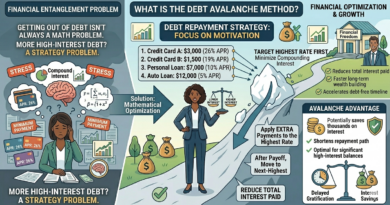
If you’re struggling with debt in general, our complete Debt Payoff Guide provides a structured roadmap toward becoming debt-free.
Final Thoughts
Most unnecessary spending isn’t caused by poor math.
It’s caused by human psychology.
Once you understand what truly influences your buying decisions, you become much better equipped to control them.
Every dollar you choose not to spend impulsively becomes a dollar you can save, invest, or use to build lasting financial security.
The goal isn’t to stop enjoying life.
It’s to make sure your spending reflects your values—not your emotions.
The small choices you make every day ultimately shape your financial future. By combining intentional spending with disciplined budgeting, clear financial goals, and consistent investing, you create a system that supports long-term wealth rather than short-term gratification.