Online Shopping Addiction: How Digital Stores Quietly Take Control of Your Wallet
Shopping has never been easier.
With just a few taps on your phone, almost anything can arrive at your doorstep within hours.
Convenience has transformed the way we buy—but it has also changed the way we spend.
For many people, online shopping is no longer just a convenient way to purchase necessities. It has become a source of entertainment, stress relief, or emotional escape.
When shopping shifts from meeting needs to satisfying emotions, it can quietly evolve into a costly habit.
In this guide, you’ll learn what online shopping addiction is, why digital stores are designed to keep you buying, and how to regain control before unnecessary spending damages your financial future.
Every healthy financial life begins with a solid plan. If you haven’t already, start with our guide to Money Management and Budgeting.
What Is Online Shopping Addiction?
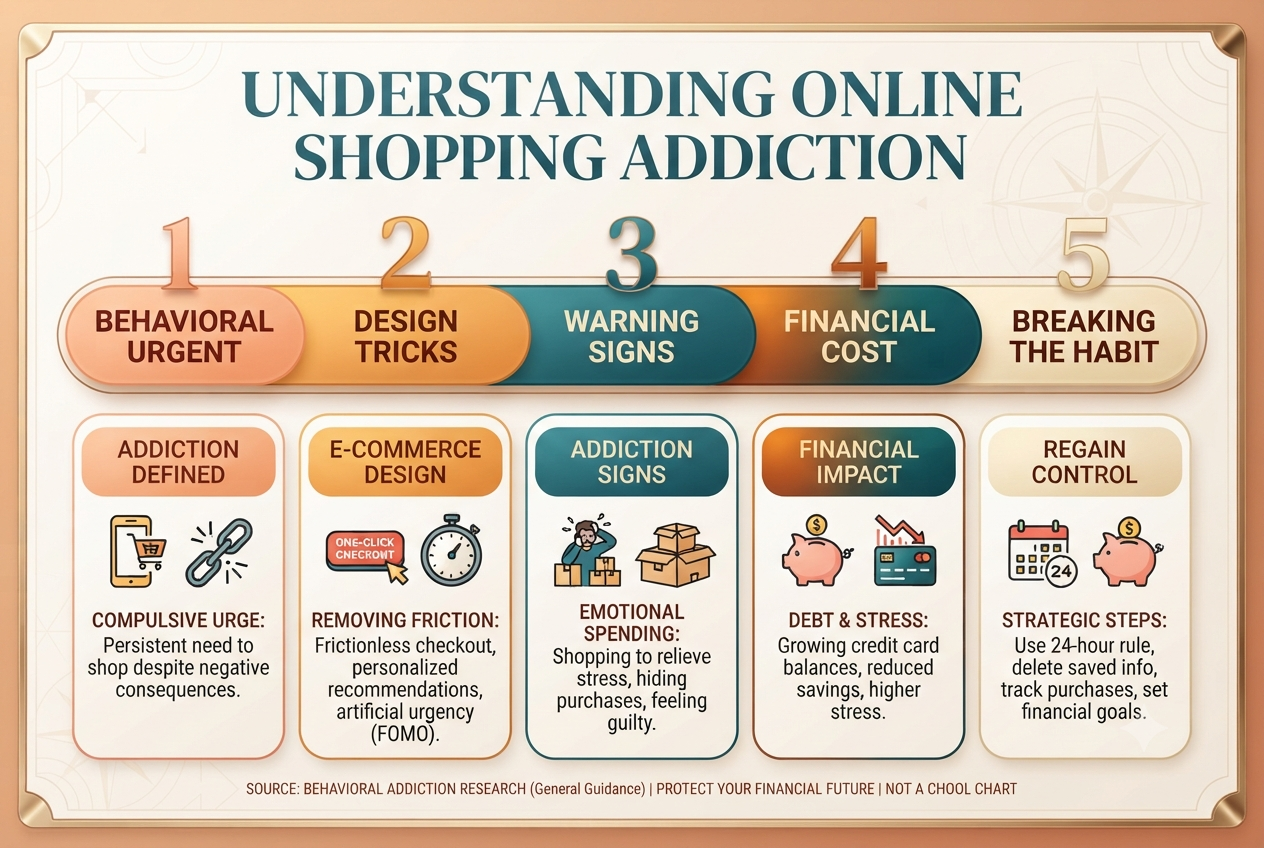
Online shopping addiction is a behavioral pattern where a person feels a persistent urge to shop online despite negative financial, emotional, or personal consequences.
Unlike occasional impulse purchases, shopping addiction involves repeated buying that feels difficult to control.
Researchers increasingly recognize online shopping addiction as a form of behavioral addiction because it shares characteristics with other compulsive behaviors, including cravings, loss of control, and continued behavior despite harmful consequences.
Why Online Shopping Feels So Rewarding
Online stores are designed to remove friction from buying.
Features such as:
- One-click checkout
- Saved payment methods
- Free shipping thresholds
- Personalized recommendations
- Limited-time offers
- Flash sales
encourage faster decisions with less deliberate thinking.
Each purchase also creates a short-lived dopamine response, making shopping feel emotionally rewarding even when the item itself isn’t necessary.
Common Signs of Online Shopping Addiction
You may be developing an unhealthy shopping habit if you:
- Shop when you’re stressed, anxious, or bored.
- Frequently buy items you never use.
- Hide purchases from family members.
- Feel guilty immediately after buying.
- Continue shopping despite growing debt.
- Browse shopping apps every day without needing anything.
These warning signs often develop gradually, making them difficult to recognize until financial problems begin to appear.
The Digital Tricks That Encourage More Spending
Modern e-commerce platforms don’t simply sell products.
They optimize every step of the buying journey.
Personalized Recommendations
Algorithms analyze your browsing history and previous purchases to recommend products you’re most likely to buy.
Artificial Urgency
Messages like:
- “Only 2 left in stock.”
- “Sale ends in 10 minutes.”
- “1,200 people viewed this today.”
create a fear of missing out (FOMO) that encourages impulsive decisions.
Frictionless Checkout
The fewer clicks required to complete a purchase, the less time you have to reconsider.
Researchers refer to many of these design techniques as dark patterns—interfaces intentionally built to influence user behavior and increase purchases.
The Financial Cost of Constant Clicking
One unnecessary purchase rarely causes financial problems.
Hundreds of small purchases over the course of a year often do.
Online shopping addiction can lead to:
- Growing credit card balances.
- Reduced savings.
- Difficulty building an emergency fund.
- Higher financial stress.
- Delayed investing.
- Long-term debt.
Many people don’t notice the impact because individual purchases seem relatively small.
Together, they can quietly consume thousands of dollars every year.
Why Shopping Doesn’t Actually Solve Stress
Shopping often feels like stress relief.
In reality, it usually provides only temporary emotional comfort.
The excitement comes from anticipation rather than ownership.
Once the package arrives, the emotional boost fades—and the financial obligation remains.
Recent research continues to find strong links between compulsive online shopping and negative emotional outcomes, creating a cycle where stress leads to shopping, which later creates even more stress.
How to Break the Online Shopping Habit
Use the 24-Hour Rule
Wait at least one day before buying any non-essential item.
Many purchasing urges disappear once emotions settle.
Delete Saved Payment Information
Adding a few extra steps before checkout gives your logical brain time to evaluate the purchase.
Unsubscribe From Marketing Emails
Fewer promotional messages mean fewer buying temptations.
Track Every Purchase
Awareness is one of the most effective ways to reduce unnecessary spending.
If you want to better understand where your money goes each month, follow our guide on Creating a Realistic Monthly Budget.
Replace Shopping With Better Habits
Instead of opening a shopping app, try:
- Going for a walk.
- Reading.
- Working out.
- Calling a friend.
- Adding money to your savings account.
Developing healthier Spending Habits makes it much easier to resist emotional purchases over time.
Build Financial Goals That Matter More Than Shopping
The strongest defense against unnecessary spending is having meaningful financial goals.
Saving for:
- A home.
- Retirement.
- Financial independence.
- An emergency fund.
- Your investment portfolio.
makes it much easier to resist temporary shopping temptations.
Learn how to create motivating financial objectives in our guide to Financial Goals.
If Online Shopping Has Already Created Debt
If frequent online purchases have resulted in credit card balances or personal loans, these guides can help you recover:
- How to Pay Off Credit Card Debt
- Debt Snowball Method
- Debt Avalanche Method
- Debt Elimination Planning
Final Thoughts
Online shopping isn’t the enemy.
Unconscious shopping is.
The same technology that makes buying easier can also make overspending almost effortless.
By recognizing your triggers, slowing down purchasing decisions, and focusing on long-term financial goals, you can enjoy the convenience of online shopping without sacrificing your financial future.
Your money should support your goals—not disappear one click at a time.